
How to Flush a Water Heater in Hard-Water Country
By Ludwig Family Plumbing · January 28, 2025 · 5 min read
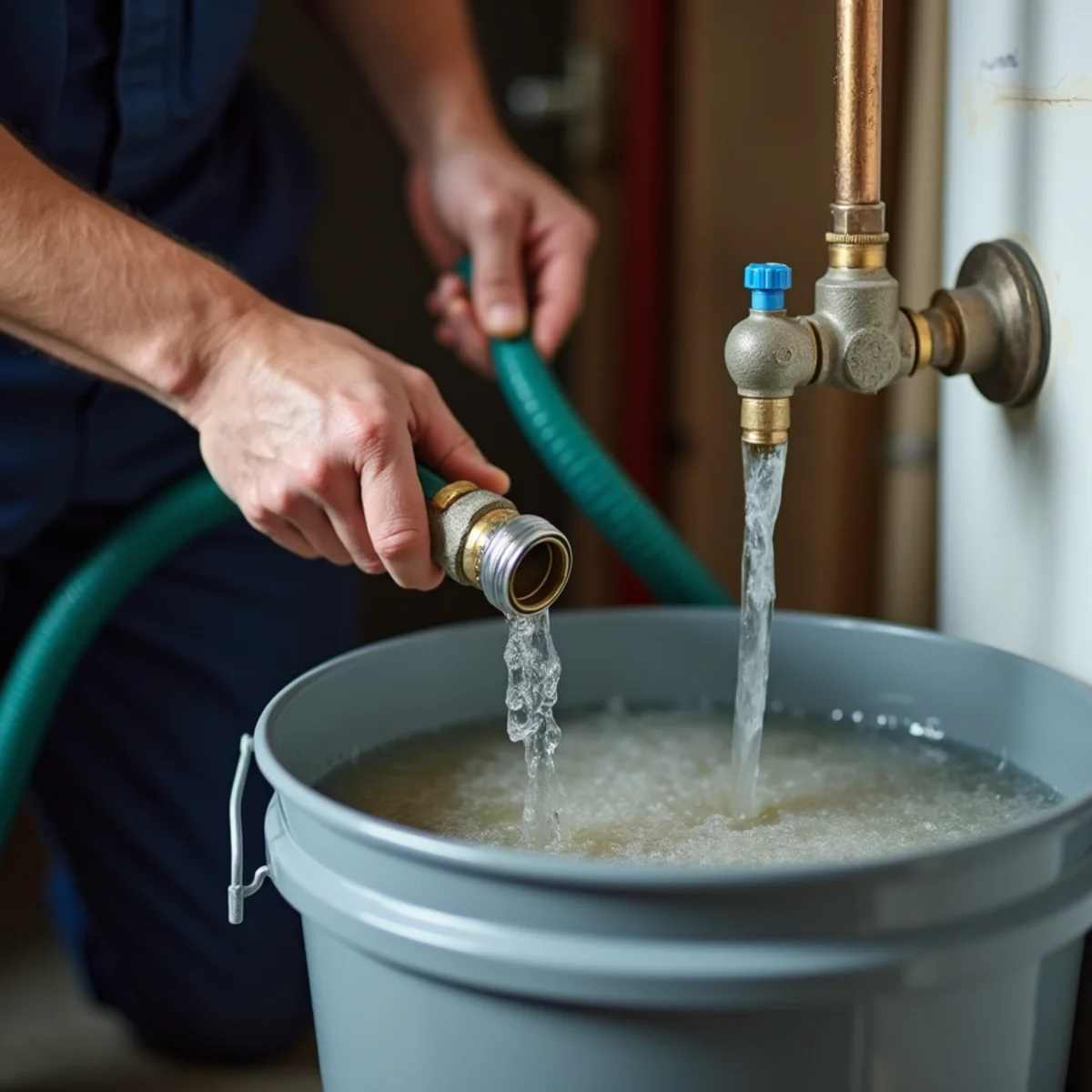
Here in McHenry County's hard-water country, an annual water-heater flush is one of the highest-return maintenance tasks a homeowner can do — and one of the most neglected. Skip it and you'll pay in a shorter tank life and a higher energy bill. Here's what's happening inside your heater and why flushing matters so much locally.
Why sediment builds up here
Hard water is loaded with dissolved minerals. As the water heats, those minerals drop out and settle as sediment at the bottom of the tank. In our area, tanks fill with sediment faster than they do in soft-water regions — which is exactly why local water heaters often don't reach the life they should.
What sediment does to your heater
A layer of sediment on the tank floor sits between the burner and the water, forcing the heater to work harder and longer to warm the same water — that's a hidden tax on every energy bill. It also causes the popping and rumbling you hear from an older tank (that's water bubbling under the sediment), can clog the drain valve, and accelerates corrosion that leads to leaks.
- Higher energy bills (sediment insulates the burner)
- Popping and rumbling noises
- Reduced hot-water capacity
- Faster corrosion and earlier tank failure
How a flush works
Flushing drains the tank to carry the settled sediment out. In brief: the water supply and the heat source are turned off, the tank is allowed to cool, a hose is connected to the drain valve, and the tank is drained and rinsed until the water runs clear. Then it's refilled and the heat restored.
It's straightforward in principle, but there are safety steps that matter — scalding-hot water, gas or electrical, and a drain valve that can clog or stick on an old tank. If you're not comfortable with those, it's a quick job for a plumber.
How often — and the bigger fix
On our hard water, flush at least once a year; some heavily used or very hard-water homes benefit from twice. If you keep finding heavy sediment, the real solution is a water softener — it removes the minerals before they ever reach the heater, protecting not just the water heater but every water-using appliance in the house.
Pairing a new water heater with a softener is one of the best value moves a hard-water homeowner can make. We can flush your current unit and help you decide whether softening is worth it for your home.
How to tell if you've waited too long to flush
If your heater pops and rumbles, that's water bubbling up through a sediment layer that's already insulating the burner — and a first flush after years of neglect can be dramatic, or the drain valve can clog with the very sediment you're trying to remove. On a badly neglected tank near the end of its life, aggressive flushing sometimes reveals a leak the sediment was masking.
That's why we flush annually rather than waiting: yearly maintenance keeps the sediment from ever compacting, protects the drain valve, and gives us an honest look at the tank's condition before it fails on a cold morning.
The Bottom Line
On McHenry County's hard water, an annual flush is the highest-return maintenance you can do. Keep the sediment moving and you'll get years more out of your heater — or let us handle the flush and tell you honestly where the tank stands.
Need a hand from a licensed, family-owned McHenry County plumber? Call (831) 290-4327 — we're available 24/7 — or request a free quote.
How We Can Help
Serving Huntley, Gilberts, Lake in the Hills and all of McHenry County.
Frequently Asked Questions
At least once a year on our hard water, and twice a year for very hard water or heavy household use. Regular flushing is the single best way to reach the top of your heater's expected lifespan.
Often, yes — the popping and rumbling of an older tank is usually water bubbling under a layer of sediment, and flushing removes it. If the noise persists or the tank is very old, it may be time to plan a replacement.
You can if you're comfortable with scalding water, gas or electrical, and a drain valve that may stick or clog on an old tank. If any of that gives you pause, it's a quick, inexpensive job for us — and we'll flag any tank issue we spot while we're at it.