
Frozen Pipe About to Burst? Emergency Steps
By Ludwig Family Plumbing · January 14, 2025 · 6 min read
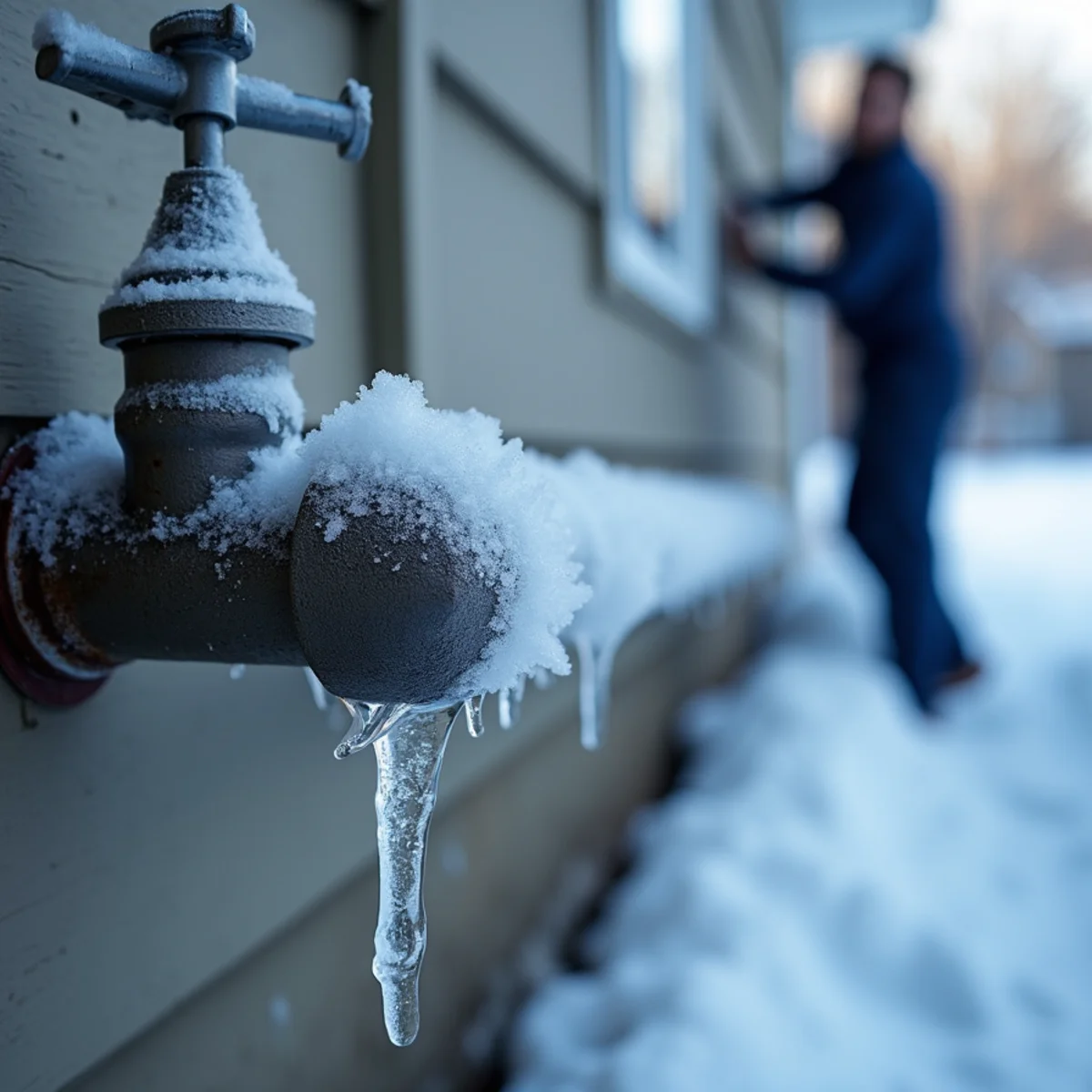
When an Illinois cold snap drops the temperature below zero, water sitting in an exposed pipe can freeze, expand, and split the pipe open. The scary part is that the split often doesn't flood until the ice thaws — which is why a frozen pipe demands action now, not later.
Here's what to do if you discover a frozen pipe, and what to do if one has already burst.
How to tell a pipe is frozen
The classic sign is no water — you turn on a faucet during a deep freeze and only a trickle (or nothing) comes out. You might also see frost on an exposed pipe, or a visible bulge where ice has expanded inside.
Frozen pipes are most common on exterior walls, in unheated basements and crawlspaces, in garages and attics, and at outdoor hose bibs left connected through winter.
If the pipe is frozen but hasn't burst
You have a window to save it. Open the nearest faucet slightly so that, as the ice melts, water and pressure have somewhere to escape — this relieves the pressure that actually causes the burst. Then apply gentle, even heat to the frozen section.
Safe heat sources include a hair dryer, a heat lamp, or towels soaked in hot water wrapped around the pipe. Work from the faucet end toward the frozen area so melting water can flow out.
- Open the nearest faucet to relieve pressure
- Apply gentle heat: hair dryer, heat lamp, or hot towels
- Warm the room with the frozen pipe if you can
What you must never do
Never use an open flame, blowtorch, propane heater, or any improvised high-heat source on a frozen pipe. It's a serious fire risk — frozen-pipe thawing is a known cause of house fires — and the sudden, uneven heat can crack the pipe you're trying to save.
If you can't safely reach the pipe, can't get it thawing, or aren't sure where the freeze is, stop and call a professional. Forcing it does more harm than good.
If the pipe has already burst
This is an emergency. Shut off your main water valve immediately to stop the flow, then open faucets throughout the house to drain the remaining water and relieve pressure. Stay away from any standing water near electrical equipment.
Call an emergency plumber right away, and — when it's safe — photograph the damage for your insurance. The faster the water stops, the smaller the repair and the cleanup.
Stopping it from happening again
Once the crisis passes, prevent the repeat. Insulate pipes in unheated and exterior spaces with foam sleeves, seal drafts near vulnerable lines, disconnect and drain outdoor hoses before winter, and on the coldest nights, let a faucet on an exterior wall drip to keep water moving.
If the same pipe freezes every winter, the real fix is rerouting or better insulating that run. We can identify the weak points and solve it for good.
Why the faucet trick actually works
Opening a faucet before you thaw a frozen pipe isn't folklore — it's the whole game. A pipe rarely bursts at the ice itself; it bursts from the pressure that builds between the ice and a closed faucet as the blockage grows. Give that pressure somewhere to go and you remove the mechanism that splits the pipe.
That's also why a slow drip on the coldest nights is cheap insurance: moving water resists freezing, and an open path keeps pressure from ever building. It costs pennies of water against a four-figure burst-pipe repair.
The Bottom Line
Handle a frozen pipe calmly — relieve the pressure, add gentle heat, and never an open flame — and you can often avoid the burst entirely. If it's already split, shut the main and call us; the faster the water stops, the smaller the repair.
Need a hand from a licensed, family-owned McHenry County plumber? Call (831) 290-4327 — we're available 24/7 — or request a free quote.
Frequently Asked Questions
There's no fixed timeline — it depends on how cold it is and how much the ice expands. That's why you should act as soon as you find a frozen pipe rather than waiting to see what happens.
On very cold nights, letting a faucet on an exterior wall drip slightly keeps water moving and relieves pressure, which reduces freeze risk. It's cheap insurance during a hard Illinois freeze.
Start with pipes on exterior walls and in unheated spaces — the basement rim, crawlspace, garage, and any line feeding an outside faucet. Those freeze first, so a quick check there catches most problems early.