
Ejector vs. Sump Pump: What's the Difference?
By Ludwig Family Plumbing · June 3, 2025 · 5 min read
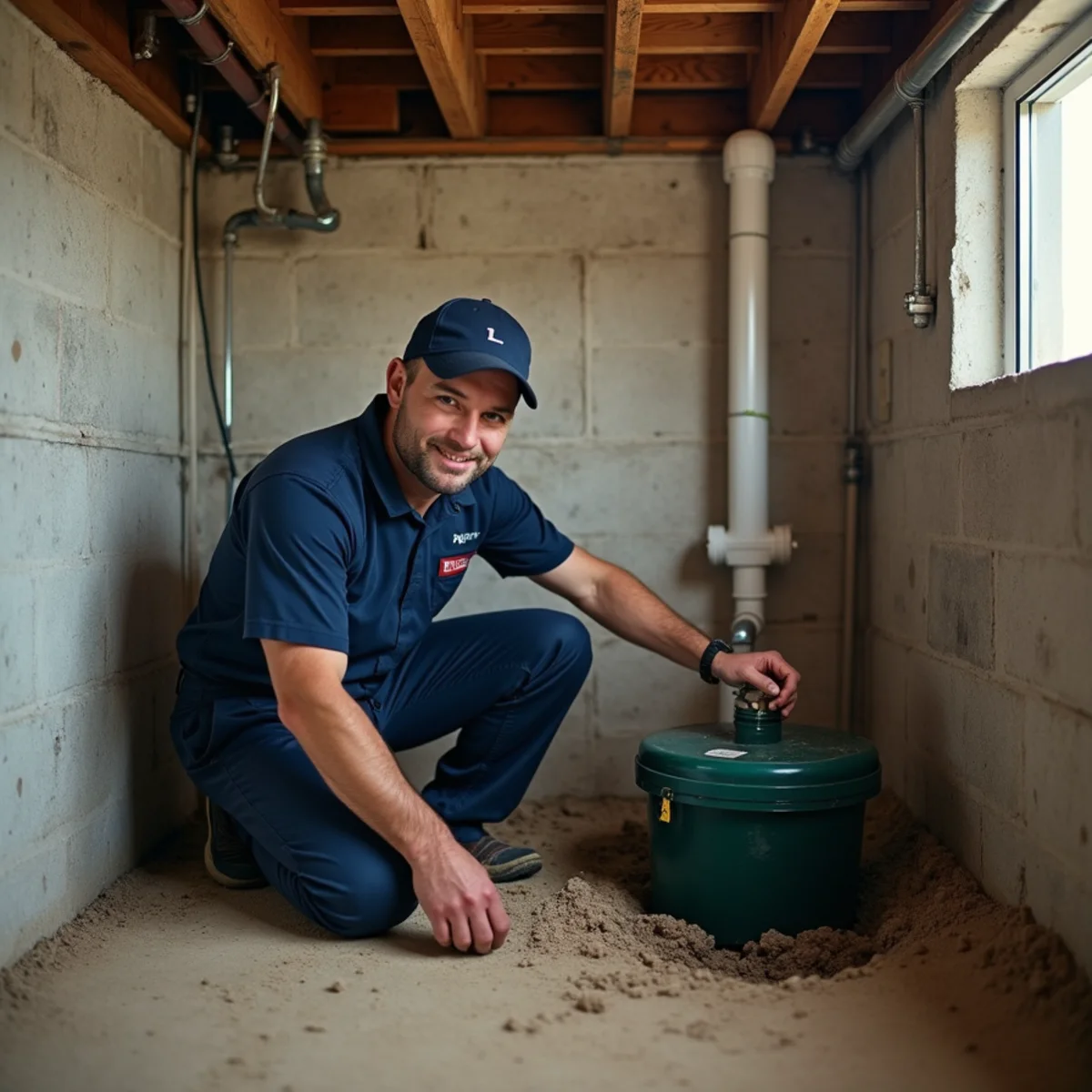
It's one of the most common mix-ups we run into: a homeowner points to 'the pump in the basement' and isn't sure whether it's a sump pump or an ejector pump. They look similar and both sit in a pit, but they do completely different jobs — and confusing them leads to odors, backups, and failed repairs. Here's the plain-English difference.
What a sump pump does
A sump pump handles clean groundwater. It sits in a sump pit that collects water seeping in around your foundation, and when the pit fills, the pump sends that water away from the house. Its whole job is keeping groundwater out of your basement.
Because it only moves clean water, a sump pit has an open or loosely covered lid — it doesn't need to be sealed.
What an ejector pump does
An ejector pump (sometimes a grinder pump) handles wastewater and sewage from fixtures located below the level of your main sewer line — a basement bathroom, laundry, or wet bar. Gravity can't carry that waste up to the sewer, so the ejector pump lifts it.
Because it handles sewage, an ejector pump sits in a sealed, gas-tight basin that must be properly vented. That sealed, vented basin is the key physical difference from a sump setup.
- Sump pump → clean groundwater → open pit
- Ejector pump → sewage/wastewater from below-grade fixtures → sealed, vented basin
Why the difference matters
Using or servicing the wrong type causes real problems. If an ejector basin isn't sealed and vented correctly, sewer gas leaks into the basement — that's the source of many mysterious basement odors. And a pump built for clean water won't handle the solids in wastewater, so it clogs and fails.
It also changes troubleshooting. If your basement toilet backs up but everything upstairs drains fine, the problem is almost certainly the ejector system, because only the below-grade fixtures rely on it.
Do you need one, the other, or both?
Many McHenry County homes have both: a sump pump keeping groundwater out, and — if there's a finished basement with a bathroom or laundry — an ejector pump moving that waste up to the sewer. Knowing which is which helps you maintain them and describe a problem accurately when you call.
Not sure what you have? We're happy to identify it on any visit and make sure both are doing their job.
Why the wrong pit lid causes basement odors
Here's the detail that trips people up: a sump pit can be open, but an ejector basin cannot. Because the ejector handles sewage, its basin has to be sealed gas-tight and vented, or sewer gas leaks straight into the basement. Most mystery basement smells near 'the pump' trace back to a failed ejector seal or a missing vent.
It also changes what you can put on it. Never swap a plain sump pump into an ejector basin — it isn't built for solids and will clog. Knowing which pit is which is the difference between a reliable basement bathroom and a recurring headache.
The Bottom Line
Once you know which pit is which, both are easy to maintain and describe when something goes wrong. If you're not sure what you have, we're glad to identify it on any visit and make sure each one is doing its job.
Need a hand from a licensed, family-owned McHenry County plumber? Call (831) 290-4327 — we're available 24/7 — or request a free quote.
How We Can Help
Serving Lake in the Hills, Huntley, McHenry and all of McHenry County.
Frequently Asked Questions
No. A standard sump pump is built for clean groundwater and will clog on the solids in wastewater. Sewage from below-grade fixtures needs an ejector or grinder pump in a sealed, vented basin.
That usually points to an ejector basin whose seal or vent has failed, letting sewer gas escape. Because the basin holds sewage, it must be gas-tight and properly vented — we can find and fix the source.
No — a standard sump pump is built for clean water and will clog on the solids in wastewater. Below-grade sewage needs an ejector or grinder pump in a sealed, vented basin, which is a different pump for a different job.